
The Self-Growth Pie Chart
Learn how to become your best self with this fun and simple activity!

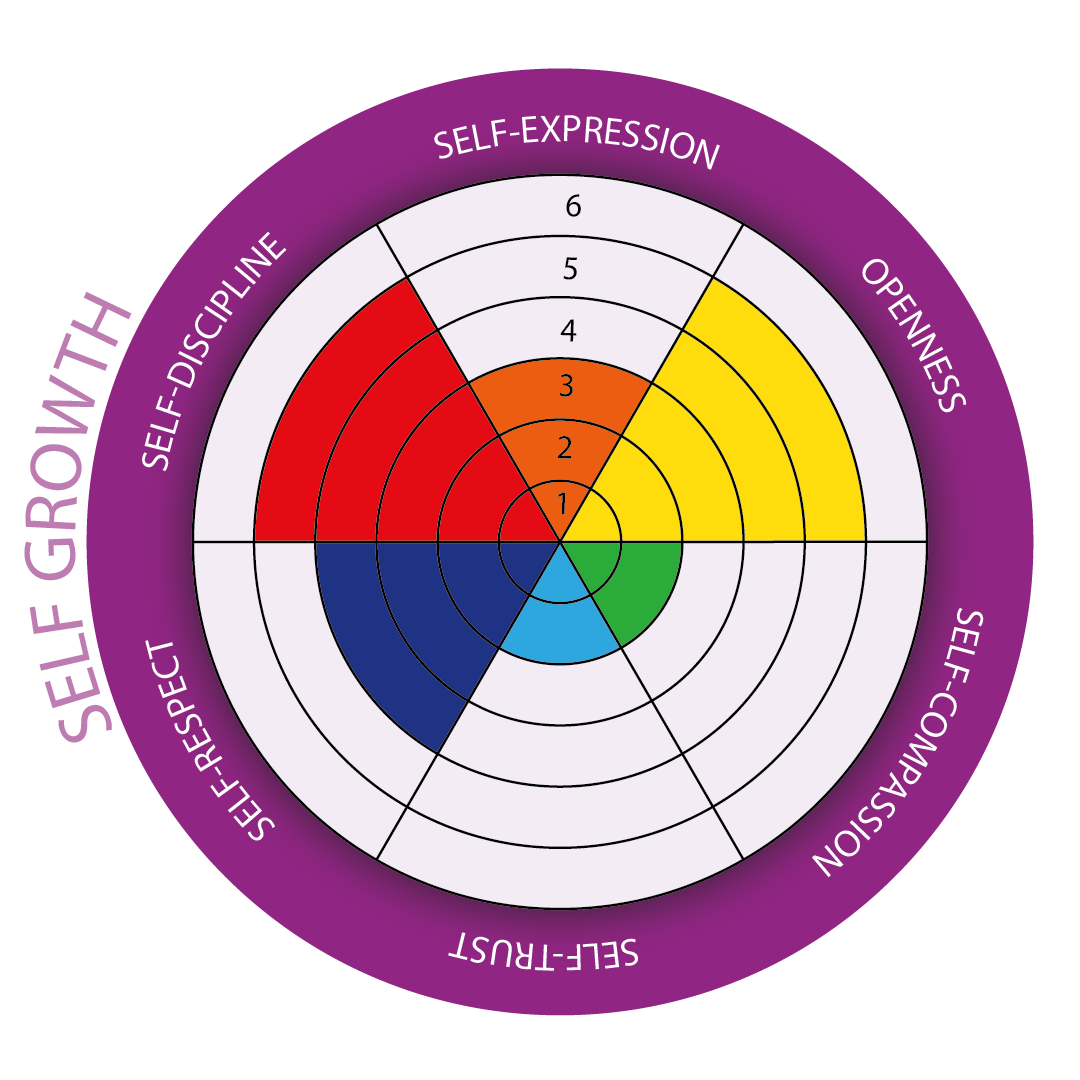
Figuring out whether you are achieving any developmental milestone can be hard to track. That’s why I designed this exercise to help you identify your areas of personal growth!
The Self-Growth Pie Chart is specifically designed to help you to check your progress by self-evaluating six key areas that make up personal growth. The categories were developed by following various developmental and motivational concepts such as Maslow’s hierarchy of needs, Erik Erickson’s psychosocial stages, and the Chakras.
The factors I’ve identified that attribute to self-growth are self-discipline, self-expression, openness, self-compassion, self-trust, and self-respect. Each factor is plotted onto a pie chart with concentric dividers for users to shade in each region and asses on a scale from one to six how much they identify with the categories. Below is a brief description of each factor.
1. Self-Discipline
When you have self-discipline you are aware that you have responsibilities in order to survive. Such responsibilities include having a job to make a living and providing you with practical needs such as food and housing. Your responsibilities also impact others such as family members and work colleagues. As a result, you are logical and efficient. You can plan and are organized, making you dependable. Examples of low self-discipline include impulsivity, emotional, and physical neglect.
Here is an example of a list of tasks when practicing self-discipline:
Writing a weekly meal plan to monitor your diet
Engaging thirty minutes of exercise daily
Mediate every morning before beginning work
Setting up a monthly budget to monitor finances
Writing down long-term goals and fulfilling them
2. Self-Expression
Self-expression involves allowing joy into your life through play. You are emotionally stable and use creative ways to express your emotions through artistic endeavors such as writing, drawing, singing, exercise, gardening, and other hobbies. Examples of low self-expression include moodiness, withdrawal, inhibition, and repression.
Here is an example of a list of tasks when practicing self-expression:
Reading, writing, or journaling
Playing music
Drawing a positive memory
Engaging in sexual intimacy with someone you love
3. Openness
Openness is the ability to act on curiosity and be flexible to change. You have lots of ideas and want to see them through. You see the potential in people and things and look to create a better world either independently or with others. You are self-sufficient and progressive and you don’t enjoy feeling stagnant. You simply go with the flow. Examples of low open-mindedness include being overly controlling, self-centeredness, preference for routine over change, and displaying fear of the unknown.
Here is an example of a list of tasks when practicing openness:
Having a conversation with someone with different views
Watching debates
Learn a new craft
Add a new activity to your daily routine
Look at things in a completely different way (ex. pay attention to the object’s color rather than its shape)
4. Self-Compassion
Self-compassion means that you are one who does not judge and accepts making mistakes. You forgive yourself for your failures and understand they are but lessons for doing and being better. You are also capable of not taking things personally, such as accepting rejection and situations in which you have been harmed by others. Your empathy allows you to be reflective and curious about why people respond differently to situations. You can separate yourself from any conflict by looking at the big picture. You are able to be vulnerable and humble with others. Your human and imperfect aura allows others to feel comfortable in your presence and trust you. Low self-compassion is perfectionism, apathy, resentment, ruminating on negative thoughts, and anxiety.
Here is an example of a list of tasks when practicing self-compassion:
Speak kindly to yourself and others daily
Ask and don’t assume
Track all your past mistakes and write down what you learned from them
Be honest with others about your feelings
Avoid playing the victim by identifying what’s in your control
5. Self-Trust
When you trust yourself you have clearly identified your values and live by them with loyalty. You have a balance of checking in with your mind and bodily sensations. You understand when something does or does not sit well with you and feel no shame for having those feelings. You display confidence in living your truth and are able to attach yourself to things that will honor how you wish to live. Having low self-trust means that you are neglectful of your needs and are over-compliant. You are not in touch with your emotions, have low self-esteem, and are dependent on others’ validation to prove your worth.
Here is an example of a list of tasks when practicing self-trust:
Write a list of your values and remain loyal to them
Say out loud to yourself what you believe in with pride
Investigate what does not feel right to you
Practice labeling your emotions when they surface
6. Self-Respect
Self-respect works hand-in-hand with self-trust. By knowing your worth and values you apply them by setting boundaries and being respectfully assertive. With emotional intelligence, you can be aware of how your actions and choices affect others. You are a mediator and are willing to negotiate, separate yourself from unhealthy situations, or make fair compromises. You are honest with yourself and others by practicing what you preach. You also know when it is important to take care of yourself. You practice self-care and are health cautious. Having little self-respect means allowing others’ emotions to influence your own, dishonesty, having poor boundaries, indulging in bad habits (addiction), and tolerating abuse.
Here is an example of a list of tasks when practicing self-trust:
Ask questions before coming to a decision
When something does not feel right for you, say it out loud and be open to how others respond
State how something made you feel and make a compromise to see if your needs can be met
Question what emotion or problem you are trying to avoid when you indulge in bad habits (alcohol, drugs, sex, etc.)
Share your point of view without shame and with humility
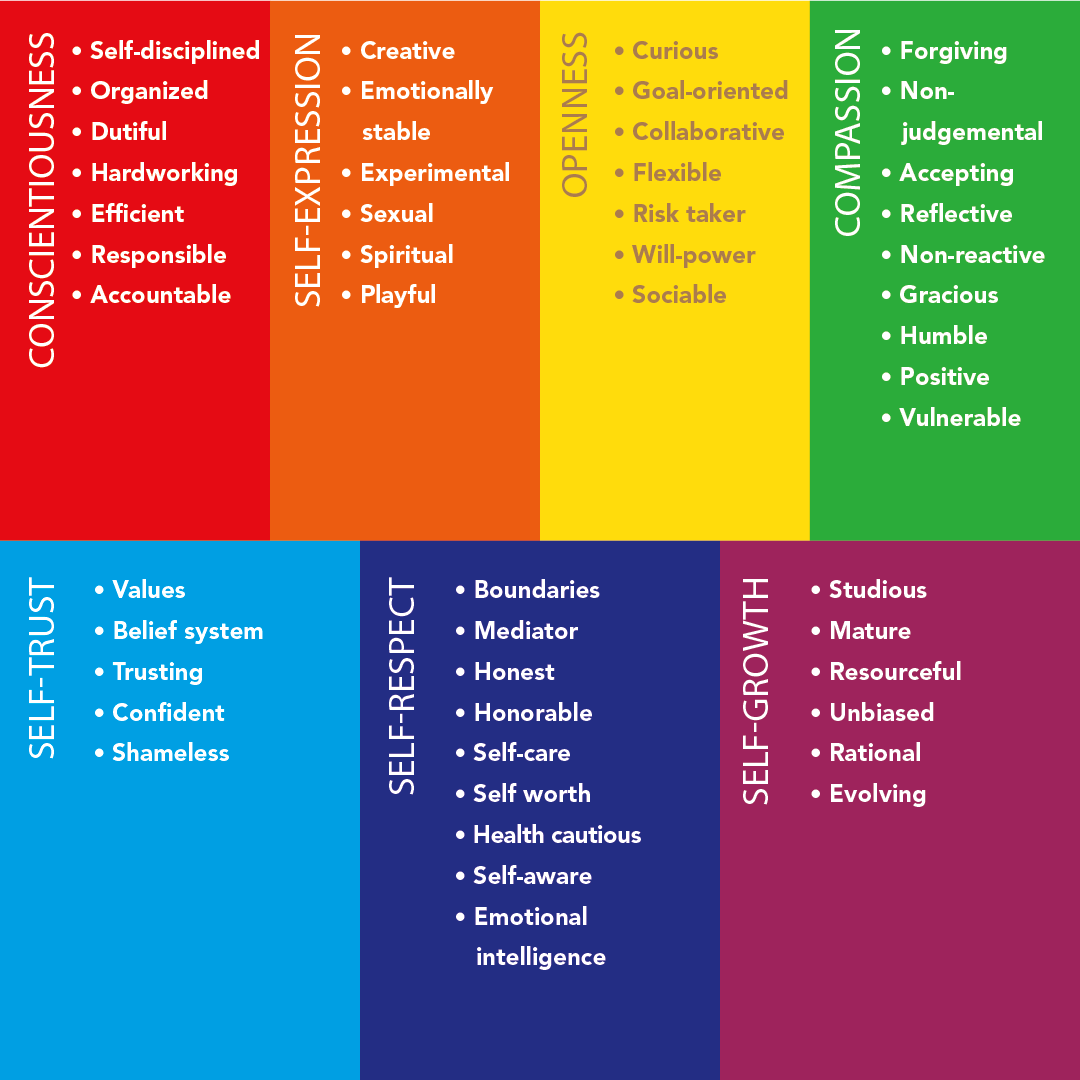
Use the Self-Growth Pie Chart Now!

Now that you have grasped the six self-growth identifiers, download the worksheet and start setting realistic and attainable goals for yourself.
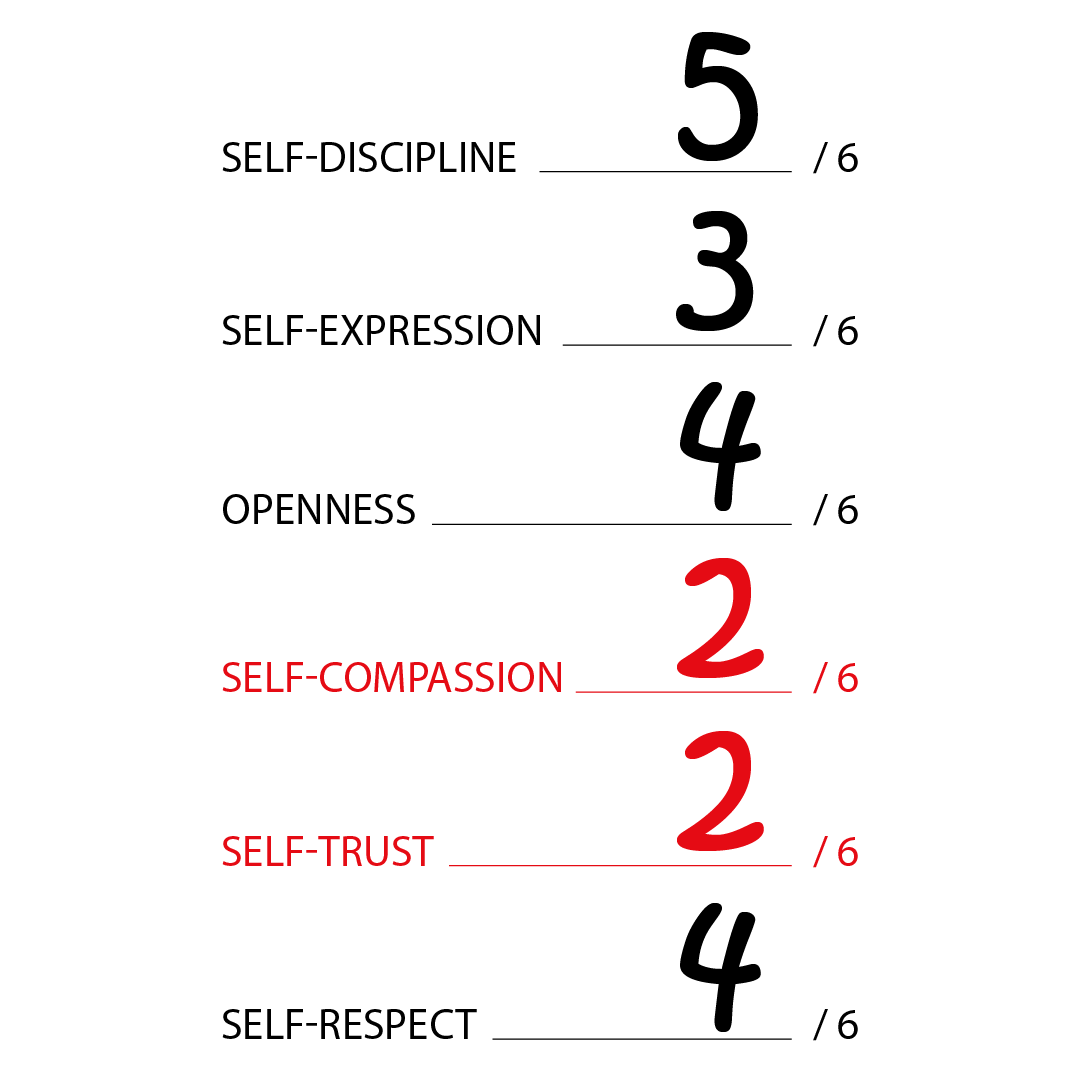
The first part is where you assess how far you are in each category on a numerical scale and shade it in the chart.
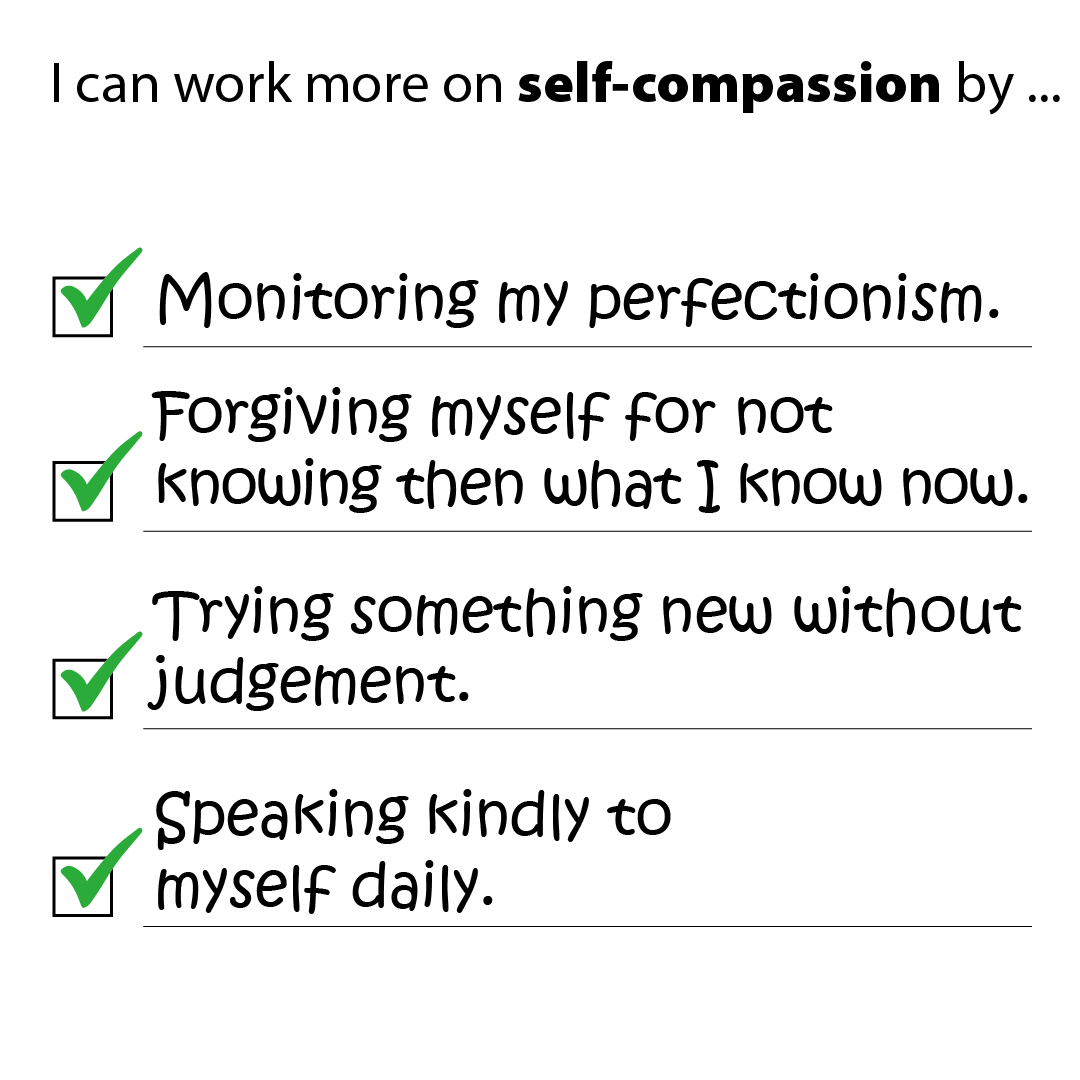
Next, generate a list of goals like the ones above to help you improve on the areas that need attention or have the lowest scores (3 and below).
Have fun!